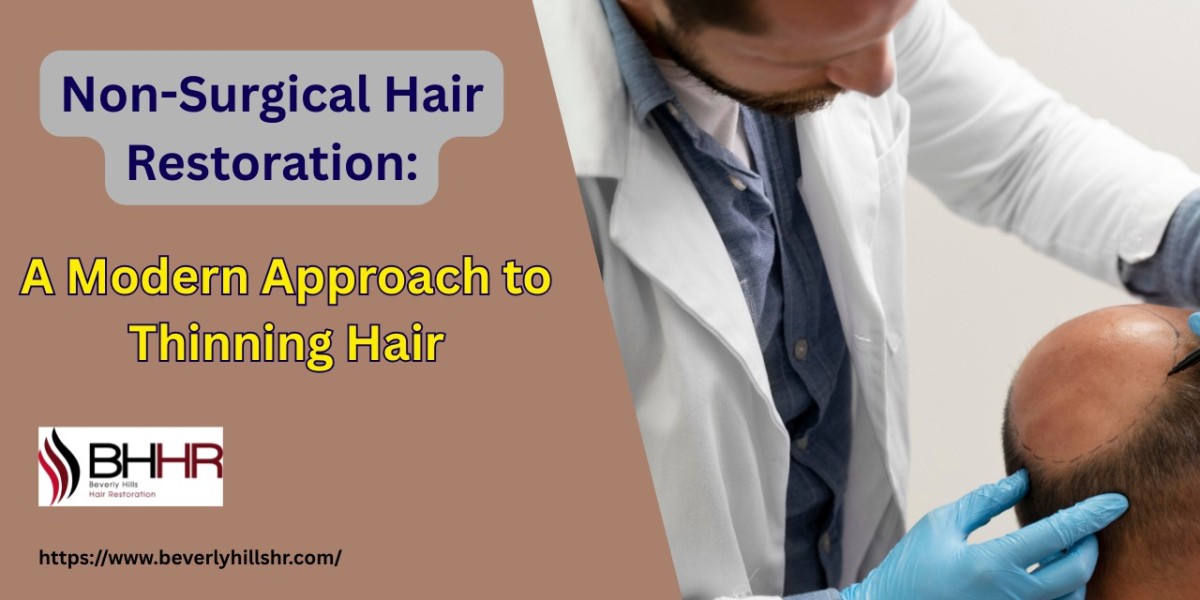
Hair loss can feel like a gradual shift you didn’t sign up for. One day your hair feels thick and effortless, and the next you’re adjusting your hairstyle to cover thinning areas. For many people, the idea of surgery can feel intimidating or unnecessary, especially in the early stages of hair loss. That’s why non-surgical hair restoration has become an increasingly popular solution. Instead of relying on incisions or grafts, these treatments focus on improving scalp health, stimulating natural growth, and enhancing the overall appearance of thinning hair. With minimal downtime and flexible treatment plans, non-surgical hair restoration offers a practical way to regain confidence while maintaining a natural look that fits your lifestyle.
What Is Non-Surgical Hair Restoration?
Non-surgical hair restoration includes a range of treatments designed to address hair thinning without surgical procedures. Rather than transplanting follicles from one part of the scalp to another, these methods work by strengthening existing follicles, encouraging natural growth cycles, or improving the visual density of the hair.
This approach is particularly effective for individuals experiencing early to moderate hair loss. Because non-surgical hair restoration avoids incisions and sutures, most treatments involve little to no recovery time. Patients can typically return to their daily activities the same day, making it a convenient option for those with busy schedules.
Another key advantage is adaptability. Hair loss patterns change over time, and non-surgical solutions can be adjusted accordingly. That flexibility makes it easier to manage hair health long-term.
Why More People Are Choosing Non-Surgical Options
There has been a noticeable shift toward non-surgical hair restoration in recent years. One reason is the desire for gradual, natural-looking improvement. Instead of dramatic changes that happen overnight, these treatments often provide steady progress that blends seamlessly with existing hair.
Convenience also plays a major role. Non-surgical hair restoration treatments are typically performed in-office and require minimal interruption to daily life. This makes them appealing to individuals who want effective solutions without lengthy downtime.
For many, starting with non-surgical methods feels like a balanced first step. It allows individuals to explore improvement without committing to permanent surgical changes.
How Non-Surgical Hair Restoration Supports Hair Health
Healthy hair growth depends on a well-nourished scalp and strong follicles. When circulation slows or follicles weaken, hair can appear thinner and more fragile.
Non-surgical hair restoration treatments aim to address these underlying factors. Some therapies stimulate dormant follicles to encourage thicker growth. Others improve blood flow and nutrient delivery to the scalp. There are also cosmetic techniques that enhance visual density in areas affected by thinning.
By targeting both biological and aesthetic aspects of hair loss, non-surgical hair restoration offers a comprehensive strategy without the need for surgery.
Common Non-Surgical Hair Restoration Solutions
One widely used method involves regenerative treatments that utilize the body’s natural components to support healthier hair growth. These therapies focus on strengthening follicles and improving overall thickness over time. They are often recommended for individuals in the earlier stages of thinning.
Another option centers on cosmetic enhancement. Through specialized scalp techniques, practitioners can create the illusion of fuller hair in areas where density has decreased. While this method does not stimulate new growth, it provides immediate visual improvement.
Custom hair systems are also considered part of non-surgical hair restoration. Designed to match natural color and texture, these systems offer instant coverage and flexibility. Many individuals appreciate this approach because it delivers noticeable results without medical intervention.
Each of these solutions can be tailored to individual needs, making non-surgical hair restoration a personalized and adaptable choice.
Who Is a Good Candidate?
Non-surgical hair restoration is suitable for a wide range of individuals. Those noticing early signs of thinning often use it to preserve existing hair and slow progression. People with more advanced hair loss may benefit from cosmetic enhancement to improve overall appearance.
It is also a practical option for individuals who prefer to avoid surgery or may not qualify for surgical procedures due to medical considerations. Because treatments can be combined or modified over time, non-surgical hair restoration provides flexibility that appeals to many.
A professional consultation helps determine the most appropriate approach based on hair pattern, scalp condition, and personal goals.
The Importance of Professional Expertise
Although non-surgical hair restoration is minimally invasive, professional evaluation remains essential. Hair loss can result from genetics, hormonal changes, stress, or scalp conditions. Identifying the underlying cause ensures that treatments are chosen thoughtfully.
Experienced clinics focus on personalized planning and realistic expectations. For example, Beverly Hills Hair Transplant integrates non-surgical hair restoration into customized treatment strategies, helping patients understand how different solutions work together to support long-term hair health.
Long-Term Benefits of Non-Surgical Hair Restoration
One of the most significant advantages of non-surgical hair restoration is its adaptability. Treatments can evolve as hair changes over time, allowing individuals to remain in control of their progress.
Consistency plays a key role in maintaining results. When approached as part of an ongoing plan, non-surgical hair restoration can help sustain healthier-looking hair and improved density. Instead of replacing hair, these treatments focus on strengthening and enhancing what already exists.
For many, this balanced approach feels more manageable and less overwhelming than surgery.
Conclusion: A Confident Step Toward Fuller-Looking Hair
Hair loss does not have to mean immediate surgery. With modern advancements in non-surgical hair restoration, individuals now have access to effective solutions that prioritize comfort, flexibility, and natural-looking results. By improving scalp health, supporting follicle strength, and enhancing visual density, non-surgical hair restoration offers a thoughtful and practical path forward. Whether addressing early thinning or seeking to improve overall fullness, these treatments provide a manageable alternative to invasive procedures. With professional guidance and realistic expectations, non-surgical hair restoration can help restore not only the appearance of fuller hair but also the confidence that comes from feeling like yourself again.