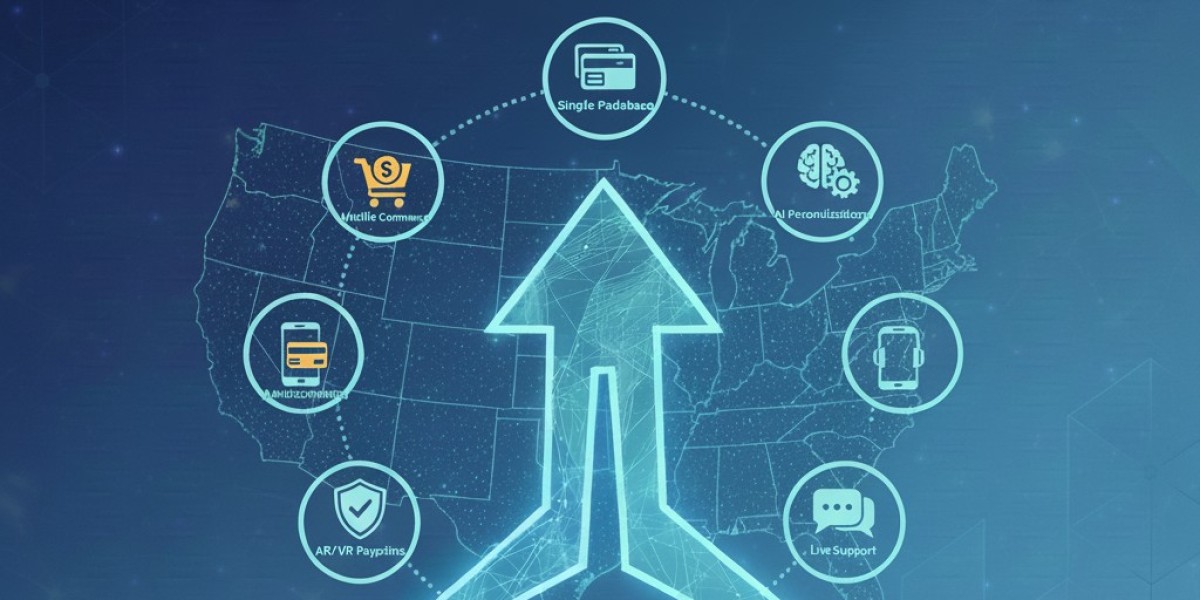

The US retail industry is moving faster than ever, driven by rapid changes in consumer behavior, new technologies, and competitive digital landscapes. As online shopping becomes the new standard, retail brands must evolve their mobile experiences to keep up. In 2025, the biggest opportunities will come from intelligent, personalized, and friction-free ecommerce apps built around modern user expectations. Understanding these trends is essential for any brand partnering with an ecommerce app development company or planning to upgrade their digital ecosystem.
Below are the top ecommerce app development trends every US retail business should watch in 2025.
1. AI-Driven Personalization Becomes the Norm
Artificial Intelligence is no longer a high-end feature—it’s a foundational part of modern ecommerce. In 2025, AI personalization will take center stage, shaping the way customers discover products, receive recommendations, and navigate mobile stores.
AI tools now analyze real-time behavior, purchase history, browsing patterns, and user intent to produce ultra-personalized shopping journeys. Retail apps using AI can dynamically update product feeds, offer adaptive pricing, and tailor content to each individual user. Brands working with an advanced app development company in USA are already leveraging these capabilities to boost conversions and retention.
Why it matters:
US shoppers prefer brands that “understand them,” and AI-driven personalization directly boosts customer loyalty and lifetime value.
2. One-Tap Checkout and Frictionless Payment Systems
Speed is everything in mobile commerce. With rising cart abandonment rates across the US retail sector, brands are focusing heavily on friction-free checkout processes.
In 2025, the trend is shifting toward:
One-tap checkout
Biometric payments (Face ID, fingerprint scanning)
Wallet integrations (Apple Pay, PayPal, Google Pay)
Subscription-based purchasing
Automated billing options
Customers expect instant, secure, and seamless transactions. The more steps you remove from the checkout funnel, the higher your conversion rates become—making this a priority for any expert in ecommerce app development.
3. Generative AI for Virtual Try-On & Immersive Shopping
From apparel and accessories to home décor and beauty products, virtual try-on features are becoming a must-have. In 2025, Generative AI and AR (Augmented Reality) technologies will reshape how shoppers interact with products.
Examples include:
Trying on clothes using real-time body mapping
Previewing furniture inside their home
Testing makeup shades with facial AR
Visualizing product customizations instantly
This trend is especially powerful for US shoppers who want confidence before purchasing. Apps with AR features consistently show higher engagement and reduced return rates. Retailers should partner with a skilled ecommerce app development company to integrate scalable AR solutions.
4. Voice Commerce & Hands-Free Shopping
Smart speakers and voice assistants like Siri, Google Assistant, and Alexa have become mainstream in American households. As voice search continues to grow, 2025 will see a major jump in voice-driven shopping experiences within ecommerce apps.
Voice features now enable:
Product searches
Order tracking
Reorder suggestions
Shopping list creation
Voice-guided navigation
Retail apps that support voice-based actions will appeal to convenience-focused US buyers, particularly busy professionals and parents.
5. Hyper-Fast Delivery & Real-Time Tracking Expectations
Speed remains a high-value differentiator in US ecommerce. Consumers now expect:
Same-day delivery
Instant order updates
Live GPS tracking
Precise delivery windows
In 2025, retail apps will integrate more advanced logistics APIs, enabling real-time inventory visibility and last-mile delivery insights.
A strong digital strategy must include:
Warehouse automation integration
Smart inventory syncing
Courier mapping systems
Leading brands rely on an app development company in USA that understands logistics technology and omnichannel retail operations.
6. Loyalty Apps & Gamified Shopping Experiences
Customer retention is becoming just as important as customer acquisition. In 2025, loyalty apps will evolve from simple point-systems to gamified, engaging experiences that keep shoppers coming back.
Trends include:
Reward streaks
Tier-based membership
Spin-to-win deals
Daily shopping missions
Personalized loyalty badges
Gamification not only boosts engagement but also increases purchase frequency. Retailers embracing this trend will have a competitive advantage in the US market.
7. Social Shopping & Influencer-Integrated Commerce
The connection between social media and ecommerce is stronger than ever. With platforms like TikTok Shop and Instagram Shopping dominating consumer behavior, US retailers must create seamless pathways from social platforms to mobile apps.
In 2025, ecommerce apps will integrate:
In-app influencer storefronts
Shoppable video content
Live stream shopping
Social recommendations & reviews
This trend increases impulse purchases and creates stronger brand-community relationships.
8. Sustainability-Focused Shopping Features
US shoppers—especially Gen Z—are increasingly eco-conscious. In 2025, retail brands will enhance their mobile apps with sustainability features such as:
Carbon-footprint calculators
Eco-friendly product badges
Recycling instructions
Green packaging options
Donation-as-you-checkout
These additions strengthen brand trust and align with modern consumer values.
Final Thoughts
2025 will be a transformative year for retail brands in the United States. From AI-powered personalization to AR try-on experiences and social-driven commerce, the ecommerce landscape is evolving faster than ever. Retailers who stay ahead of these trends—and work with the right ecommerce app development company—will outperform their competitors and deliver outstanding digital shopping experiences.
If you’re planning to upgrade your retail mobile app, now is the perfect time to explore the next generation of ecommerce app development and position your brand for long-term success.