
Electromagnetic Compatibility (EMC) testing plays a critical role in ensuring that electronic devices operate as intended without causing or experiencing interference from other equipment. With the rapid growth of wireless communication, automotive electronics, medical devices, and IoT products, regulatory standards for EMC compliance have become increasingly strict. To meet these requirements, specialized EMC testing equipment is used by manufacturers, test laboratories, and certification bodies worldwide.
This article explores the importance of EMC testing equipment, the different types available, and how they help industries achieve compliance with global standards.
Why EMC Testing Equipment is Important
Electronic devices emit electromagnetic radiation during operation. If this radiation exceeds permissible levels, it can interfere with nearby systems—ranging from smartphones and medical devices to aircraft communication systems. Similarly, devices must be resistant to external electromagnetic interference to function safely.
EMC testing equipment ensures that:
Devices meet international regulatory standards (such as FCC, CISPR, IEC, and MIL-STD).
Manufacturers avoid costly recalls, penalties, or certification delays.
Products operate safely and reliably in real-world environments.
Brand reputation is protected by delivering compliant, high-quality products.
Types of EMC Testing Equipment
Different categories of EMC test equipment are designed to evaluate both emissions (unwanted radiation) and immunity (resistance to external interference). Below are the most commonly used instruments:
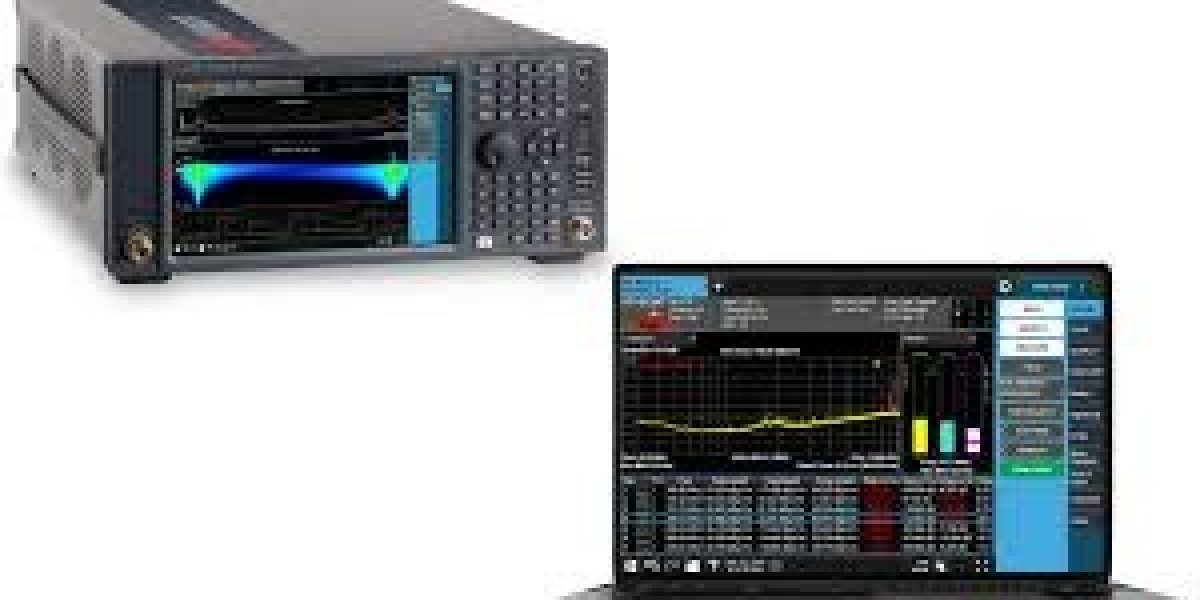
1. EMI Receivers and Spectrum Analyzers
Purpose: Measure unwanted electromagnetic emissions from a device under test (DUT).
Key Features: Wide frequency range, high sensitivity, compliance with CISPR 16 standards.
Application: Identifies emission peaks, ensures compliance with regulatory emission limits.
2. Anechoic Chambers
Purpose: Provide a controlled, interference-free environment for EMC testing.
Key Features: Shielded room with radio-frequency (RF) absorbing material.
Application: Used for radiated emissions and immunity tests without background noise.
3. LISNs (Line Impedance Stabilization Networks)
Purpose: Stabilize impedance and measure conducted emissions on power lines.
Key Features: Filters out external noise, provides a defined impedance to the DUT.
Application: Critical for power supply and automotive EMC testing.
4. EMC Antennas
Purpose: Detect or generate electromagnetic fields.
Types: Biconical antennas, log-periodic antennas, horn antennas.
Application: Radiated emission measurements and immunity testing across different frequency ranges.
5. Current Probes and Clamp Meters
Purpose: Measure conducted RF currents on cables without direct connection.
Application: Useful for troubleshooting and compliance verification.
6. RF Amplifiers
Purpose: Boost signals during immunity tests.
Key Features: High linearity, wide frequency coverage.
Application: Ensure test fields reach required strength during susceptibility evaluations.
7. Transient Generators
Types:
ESD Simulators: Replicate electrostatic discharge events.
Surge Generators: Simulate lightning-induced surges.
EFT/Burst Generators: Produce fast transient pulses.
Application: Evaluate device resilience against sudden, harsh disturbances.
8. Software for EMC Testing
Purpose: Automate testing, data acquisition, and report generation.
Application: Increases efficiency, reduces errors, and ensures compliance with regulatory formats.
Key Features to Consider When Choosing EMC Testing Equipment
When investing in EMC test equipment, organizations should consider:
Compliance Standards: Ensure the equipment meets CISPR, IEC, FCC, MIL-STD, or automotive-specific standards.
Frequency Range: Choose instruments with sufficient range to cover regulatory requirements.
Accuracy & Sensitivity: Critical for detecting weak signals and ensuring reliable measurements.
Calibration & Certification: Instruments must be calibrated regularly to maintain test accuracy.
Scalability: Equipment should support future upgrades as standards evolve.
Applications of EMC Testing Equipment
EMC testing equipment is widely used across industries such as:
Automotive: Ensures electronics like infotainment, ADAS, and EV battery systems function reliably.
Medical Devices: Verifies that life-saving equipment like pacemakers and monitors are interference-free.
Consumer Electronics: Certifies devices like smartphones, laptops, and smart home gadgets.
Aerospace & Defense: Ensures safety-critical systems meet stringent EMC standards.
Industrial Equipment: Protects machinery and control systems from operational disruptions.
Leading Manufacturers of EMC Testing Equipment
Several global companies specialize in developing advanced EMC test solutions, including:
Rohde & Schwarz
Keysight Technologies
Tektronix
ETS-Lindgren
Teseq (AMETEK)
Frankonia Group
Narda Safety Test Solutions
These manufacturers provide complete EMC testing setups—from basic instruments to fully automated test systems.
Conclusion
EMC testing equipment is the backbone of ensuring that electronic products meet global safety and compliance requirements. From spectrum analyzers and LISNs to anechoic chambers and transient generators, each tool plays a vital role in identifying, measuring, and mitigating electromagnetic interference.